
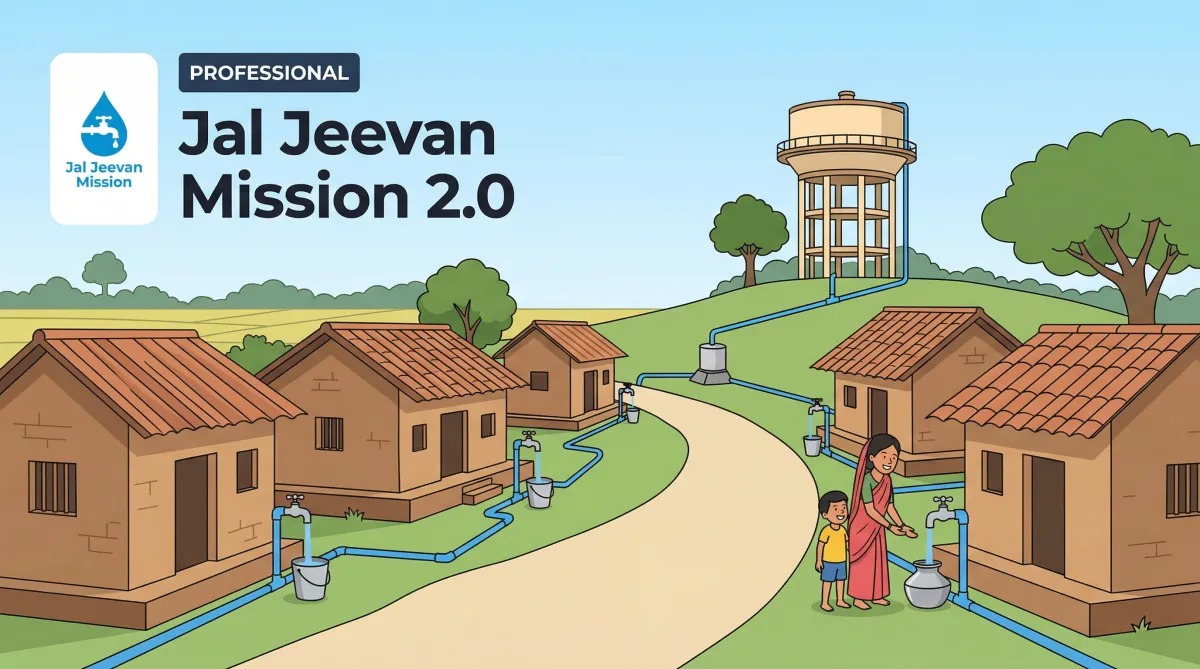
Access to clean drinking water is still a daily challenge for millions of rural households in India. Irregular supply, unsafe sources, and long distances to fetch water affect health, education, and livelihoods. To solve this, the government launched Jal Jeevan Mission—and now, Jal Jeevan Mission 2.0 aims to strengthen and sustain this progress.
This updated phase focuses not just on providing tap connections, but also on ensuring long-term water availability, quality monitoring, and infrastructure improvement. In this guide, you’ll understand what Jal Jeevan Mission 2.0 is, its key features, benefits, and how it impacts rural households.
What is Jal Jeevan Mission 2.0?
Jal Jeevan Mission 2.0 is an extended and improved version of the original Jal Jeevan Mission launched in 2019. The goal remains the same:
Provide functional household tap connections (FHTC) to every rural home.
However, the 2.0 phase goes further by focusing on:
- Long-term sustainability of water sources
- Greywater management (wastewater reuse)
- Strengthening village-level water infrastructure
- Improving water quality monitoring systems
You can explore official updates here:
👉 https://jaljeevanmission.gov.in/
Key Objectives of Jal Jeevan Mission 2.0
1. Universal Tap Water Coverage
Ensure every rural household has access to a tap water connection with adequate supply.
2. Sustainable Water Sources
Focus on rainwater harvesting, groundwater recharge, and local water conservation methods.
3. Water Quality Assurance
Regular testing to ensure safe drinking water, especially in areas affected by contamination.
4. Greywater Management
Promote reuse of household wastewater for agriculture or other purposes.
5. Community Participation
Empower local village committees to manage and maintain water systems.
Key Features of Jal Jeevan Mission 2.0
Infrastructure Strengthening
The mission emphasizes building and upgrading:
- Pipelines
- Storage tanks
- Treatment plants
Smart Monitoring Systems
Use of digital tools to track water supply and quality in real time.
Focus on Water-Stressed Regions
Special attention to drought-prone and desert areas.
Capacity Building
Training local communities to manage water systems independently.
How Jal Jeevan Mission 2.0 Benefits Rural India
Improved Health
Clean water reduces waterborne diseases like diarrhea and cholera.
Time Savings
Women and children no longer need to travel long distances to fetch water.
Better Education
Children, especially girls, can focus more on school instead of water collection.
Economic Growth
Reliable water supply supports agriculture and small businesses.
Eligibility and Coverage
Jal Jeevan Mission 2.0 primarily targets:
- Rural households without tap water connections
- Water-scarce and drought-affected regions
- Areas with poor water quality
The scheme is implemented by state governments with support from the central government.
Challenges in Implementation
Despite its strong vision, the mission faces some challenges:
Water Source Sustainability
Ensuring long-term water availability remains complex in some regions.
Infrastructure Maintenance
Proper maintenance is essential but often overlooked at the local level.
Awareness and Training
Communities need continuous training to manage systems effectively.
How to Check Jal Jeevan Mission Status
You can check your village or household status online through the official dashboard:
👉 https://ejalshakti.gov.in/jjmreport/JJMIndia.aspx
This portal provides:
- Tap connection coverage
- State-wise progress
- Water quality reports
Role of Digital Tools in Awareness & Documentation
Managing information, applications, or awareness campaigns becomes easier with simple digital tools.
For example:
Use a text case converter to format and structure your applications or reports clearly.
Use a free word count checker to make sure your documents meet official length requirements and stay easy to read.
These small tools help improve clarity and professionalism when dealing with government-related communication.
Future of Jal Jeevan Mission 2.0
The mission is expected to play a crucial role in India’s long-term development. Future plans include:
- Integration with smart village initiatives
- Advanced water conservation technologies
- Stronger public-private partnerships
- Expansion of wastewater recycling systems
With continued investment and community involvement, Jal Jeevan Mission 2.0 can ensure water security for generations.
FAQs
1. What is Jal Jeevan Mission 2.0?
It is the upgraded phase of the Jal Jeevan Mission, focusing on sustainable rural water supply and infrastructure improvement.
2. Who benefits from Jal Jeevan Mission 2.0?
Rural households across India, especially those without tap water access.
3. Is Jal Jeevan Mission 2.0 free for households?
Yes, basic tap water connections are provided under government funding, though local contributions may apply in some areas.
4. How can I check my village status?
You can check online through the official Jal Jeevan Mission dashboard.
5. What is greywater management?
It refers to reusing household wastewater for purposes like irrigation.
6. Which ministry runs this mission?
The Ministry of Jal Shakti oversees the implementation.
Conclusion
Jal Jeevan Mission 2.0 is more than a water supply scheme—it’s a long-term solution for rural development, health, and sustainability. By focusing on both access and management, it addresses the root causes of water scarcity in India.
If you live in a rural area or want to stay informed about government schemes, keep checking official updates and maintain proper documentation. Using simple tools for organizing and formatting your information can make the process smoother and more effective.